How loud is construction machinery?
Typical noise levels from common site equipment, and what actually quietens each machine.
How to read this table
Levels are typical sound pressure levels at about 10 m from the machine, unmitigated. Noise falls by roughly 6 dB each time the distance doubles in open ground.
Daytime benchmark
BS 5228-1 uses daytime thresholds of 65–75 dB LAeq at the facade of a home, depending on the area's usual background noise.
Evenings and nights
Thresholds are much lower outside daytime hours. Noisy night work normally needs prior agreement with the council.
Jackhammer / breaker
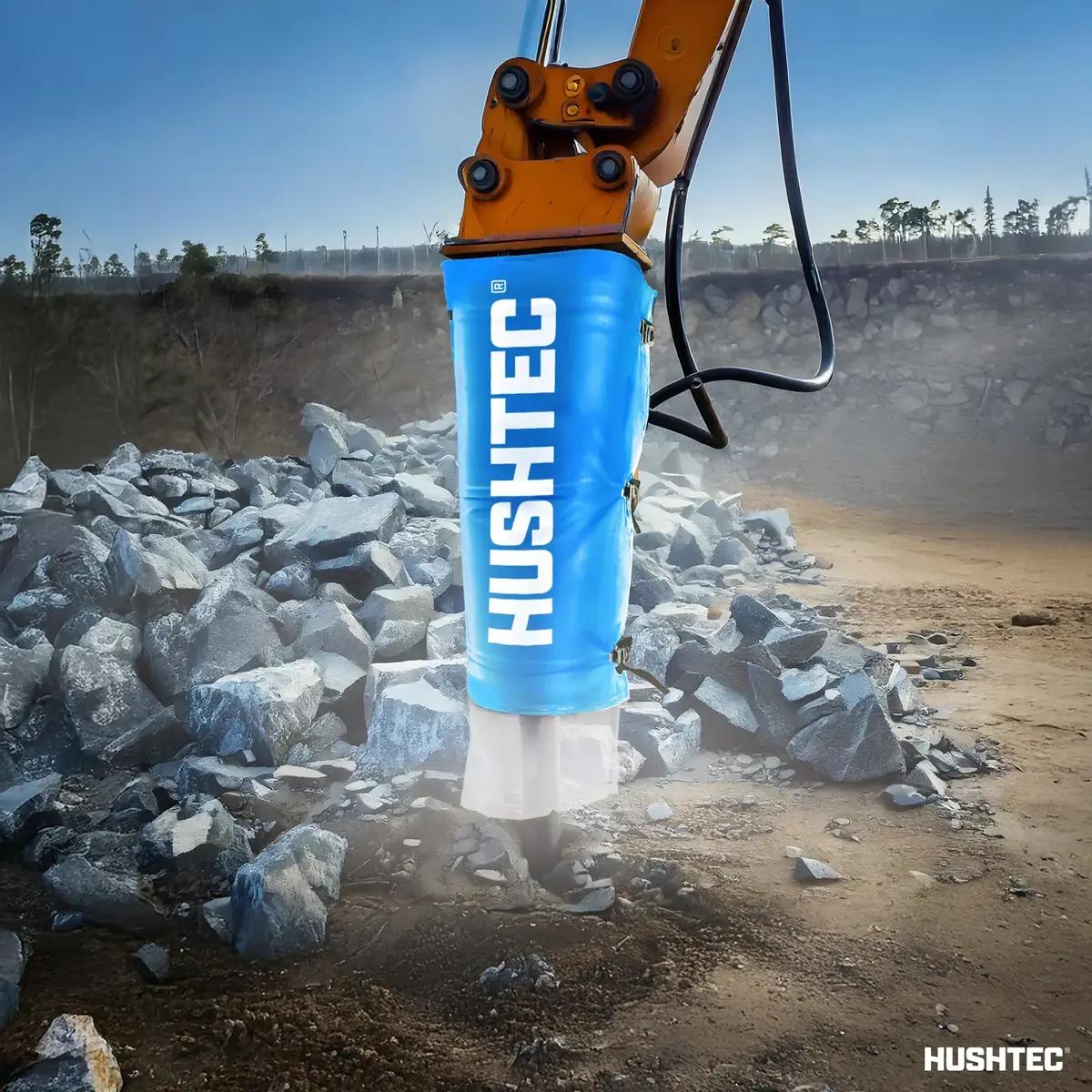
One of the loudest tools on site. A shroud fitted round the breaker is the most practical fix: in a Hushtec test a rock breaker measured 92.4 dB unshrouded and 77.4 dB shrouded.
Pile driver (impact)
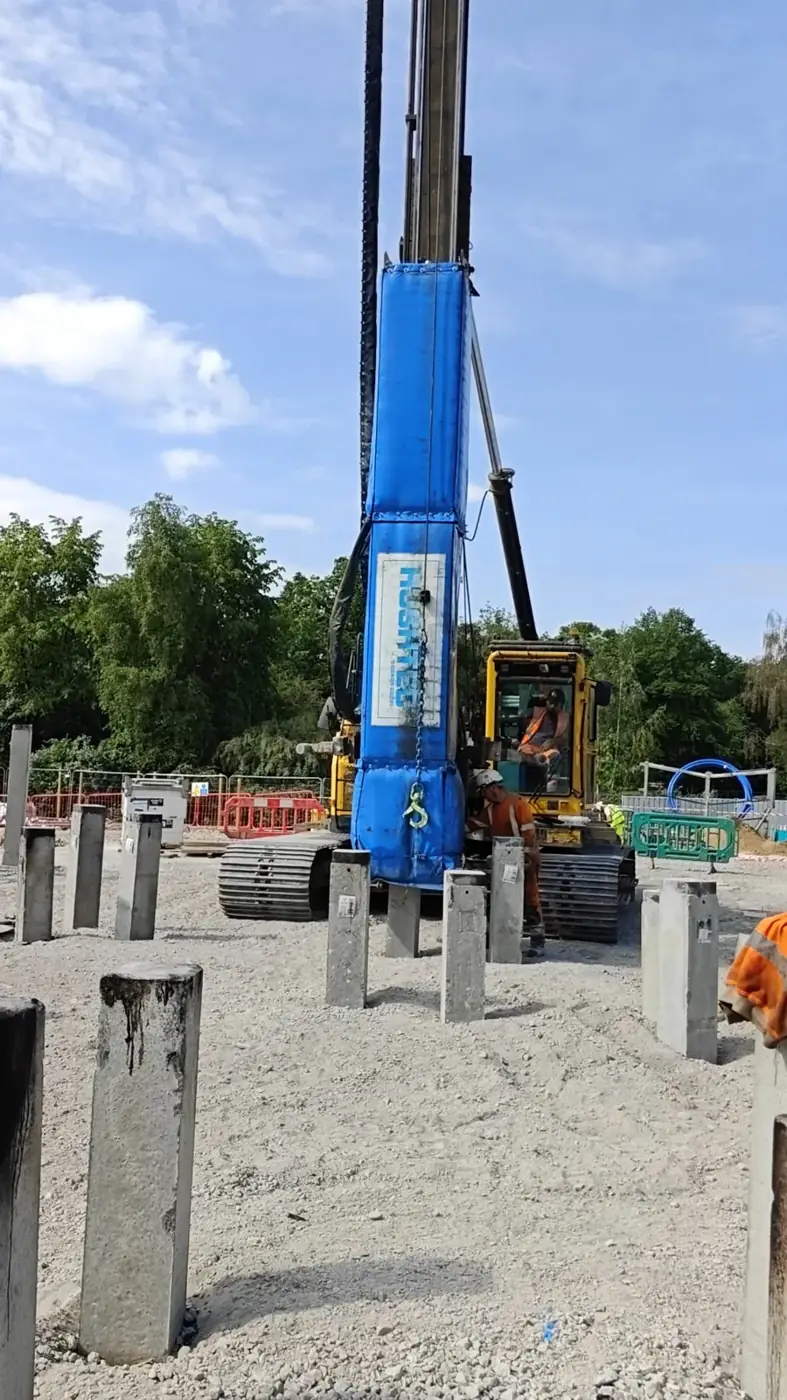
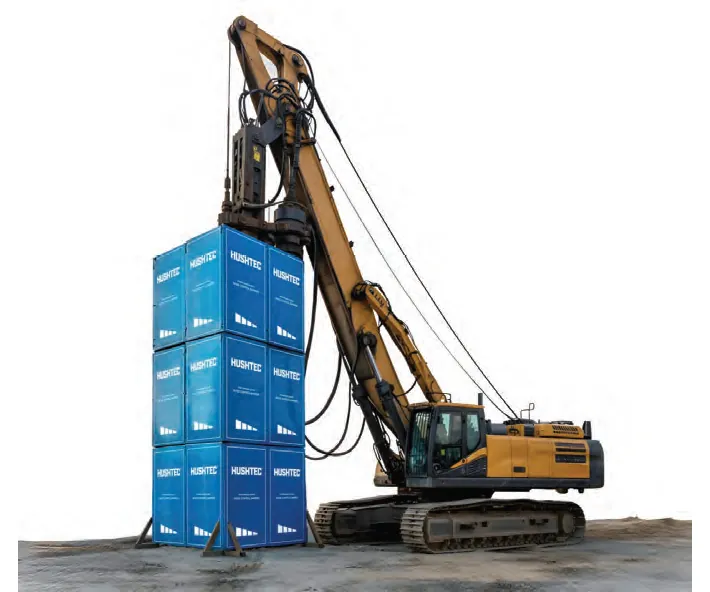
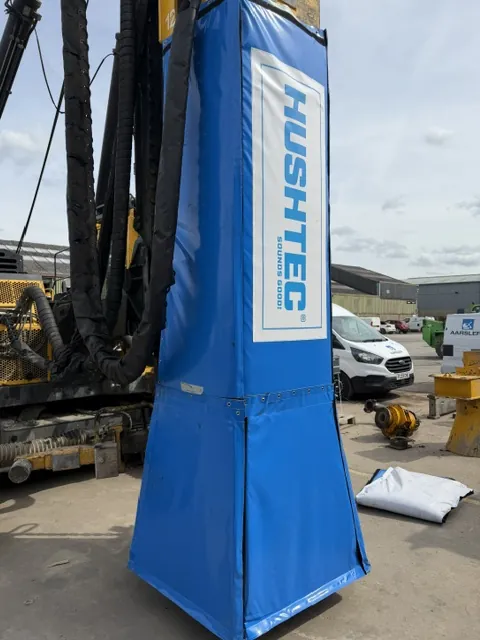
Extremely loud and low-frequency, and one of the most complained-about activities. CFA or rotary bored piling is significantly quieter. Where driven piling is used, a shroud round the hammer cuts around 7 dB, and a freestanding enclosure round the active pile 15–21 dB.
Angle grinder
Very high, high-pitched noise. Best done inside a screened cutting station away from the boundary.
Circular / table saw
Intermittent high peaks. Enclosing the saw bench or using a low-noise blade reduces it.
Excavator / digger
Modern excavators are quieter than older models, but tracking and bucket impacts still carry. Rubber pads and careful operation help.
Compactor / wacker plate
Noise plus vibration that neighbours can feel. Best kept to mid-day and away from older buildings.
Nail gun (pneumatic)
Intermittent impulse peaks well above 100 dB.
Diesel generator
Continuous low-frequency drone, often running for long hours. An enclosure or a screen about 1.5 m taller than the set helps; battery or hybrid units can let it switch off at night.
Concrete mixer (drum)
Moderate but persistent. Siting away from homes is the simplest control.
Dumper truck
Tonal reversing alarms add to the problem. Broadband ("white noise") alarms are recommended in residential areas.
Pressure washer
Duration matters: prolonged use near boundaries attracts complaints.
Tower crane
Relatively quiet. Hoist motors and alarms are the main sources.
How the loudest plant can be quietened
Piling rigs and breakers top the table, but they don't have to run unscreened. Shrouds and enclosures at the source are among the most effective ways to bring levels down at the boundary.
| Option for driven piling | Reduction | As piling moves |
|---|---|---|
| Perimeter barrier (up to 8 m) | Depends on height and position; Rw 32 dB, αw 1.0 panels | Stays at the site boundary |
| Freestanding shroud | 15–21 dB | A few hours to move to the next pile |
| Rig-mounted shroud | 7.2 dB lower at 5 m | Travels with the rig |
Field comparison: an unshrouded rig measured 100.0 dB at 5 m and 89.9 dB at 15 m; with a full shroud, 92.8 dB and 82.5 dB. Indicative results from separate trials (Woodhall Spa and Ramsey). Product data from Hushtec, which supports this site. Read the full comparison →
Noise levels are indicative only, based on typical UK site measurements and BS 5228 data. Actual levels depend on equipment age, maintenance, distance and site conditions. For formal assessments, consult an acoustic consultant.